


Why Every New First Responder Needs Trauma Shears?
Trauma shears are one of the most relied-upon tools in EMS training and fieldwork. Students and new providers quickly learn how important fast and safe cutting can be when preparing a patient for assessment or removing obstacles during care. A dependable pair of shears supports smoother evaluations, better visibility, and quicker interventions in both controlled and urgent situations.
Two commonly used models offered by MedTechKits, the titanium coated and the stainless steel trauma shears, provide learners with practical and affordable options. Each one supports the work of EMTs and field responders who need reliable gear from the first day of class through clinical rotations. These tools are designed to handle frequent use, tough materials, and the stress that comes with emergency environments.
Key Functions of Trauma Shears During Patient Care
Trauma shears play an essential role in the early stages of patient care, giving EMS students the ability to expose injuries quickly and safely. Being able to remove clothing without causing additional harm is a core skill in trauma management.
The rounded safety tip found on both stainless-steel and titanium-coated shears helps prevent accidental cuts during close-contact assessments. This immediate access to wounds allows students to perform faster evaluations, apply interventions sooner, and follow proper assessment protocols.
Beyond clothing removal, trauma shears support many routine tasks students encounter during clinical training. They help cut medical tape, trim gauze, open packaging, and shape materials for splinting or wound care. Their angled blade design improves leverage, allowing learners to cut through tougher fabrics like denim or uniforms without excessive effort.
In real field environments, reliable trauma shears boost confidence and readiness for unpredictable situations. They ensure that students can respond quickly during scene assessments, manage patient preparation with fewer delays, and maintain control over critical steps in the care process.
The Titanium-Coated Trauma Shears
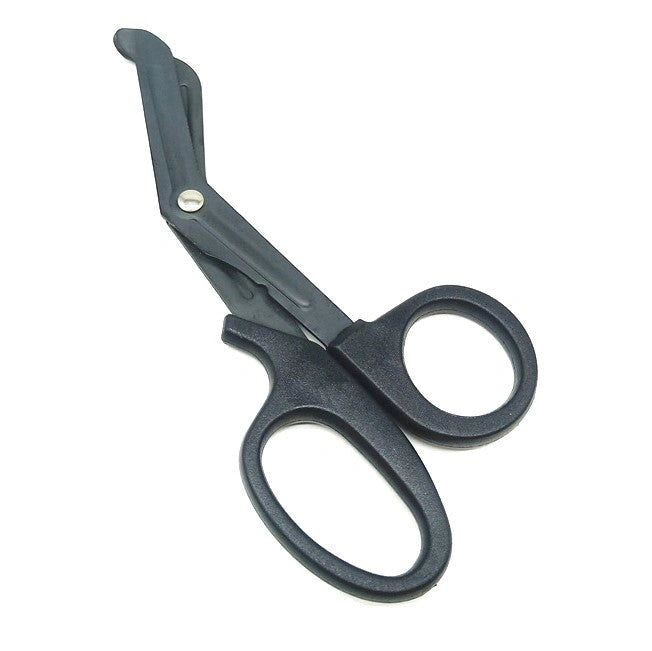
The titanium coated trauma shears from MedTechKits offers a balanced combination of durability and comfort. The stainless-steel blades are coated with titanium, giving the shears added strength and resistance to wear. Their rounded tip improves patient safety by preventing accidental skin injury, particularly when cutting close to the body.
The curved, non-slip handle gives users a secure and steady grip during fast-paced assessments. At 7.5 inches, the shears match the standard length preferred by EMTs, making them comfortable to carry and easy to control. This version works well for students who expect heavier use or want a more long-lasting tool in their kit.
In terms of specifications, the titanium coating enhances corrosion resistance and allows the blades to maintain sharpness after repeated use on dense fabrics. The angled blade design improves cutting leverage, helping users move cleanly through thicker materials without applying excessive force. Its overall construction supports consistent performance during fieldwork, simulations, and prolonged training sessions.
The Stainless Steel Trauma Shears
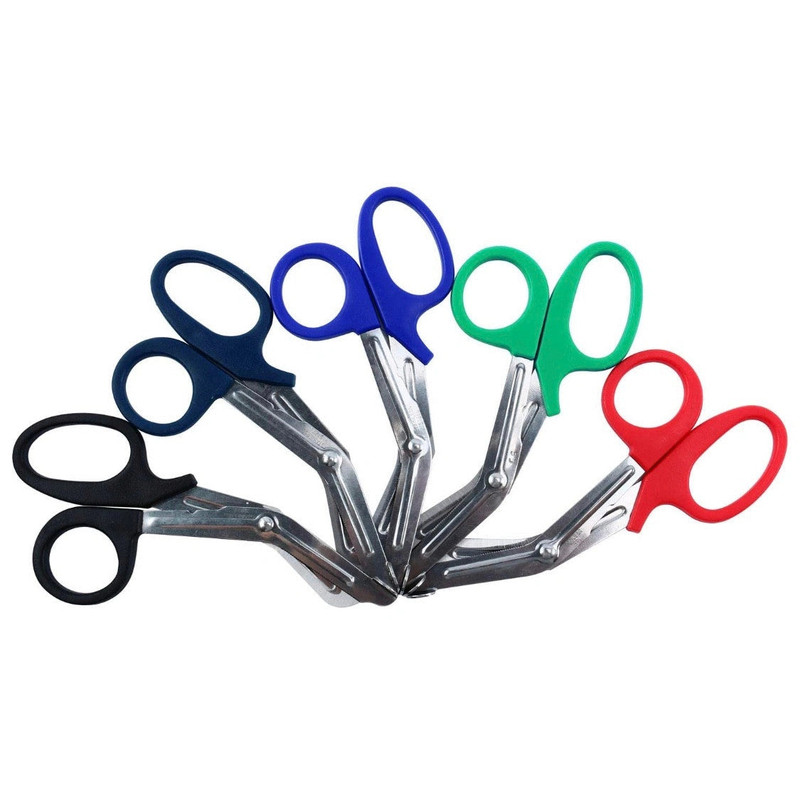
The stainless steel emt shears from MedTechKits delivers dependable performance using a straightforward stainless-steel design. The blades provide clean, controlled cuts suitable for clothing, gauze, and other common materials encountered in basic training scenarios. Similar to the titanium model, the shears feature a rounded safety tip to protect the patient during cutting.
The non-slip, curved handle improves handling and reduces hand fatigue during repeated practice sessions. Their lightweight build makes them ideal for learners who want a simple, affordable option that fits easily into any EMS kit or clinical pocket. This model is especially useful for new students or as a backup tool for field providers.
Regarding specifications, the stainless-steel blades offer a stable cutting edge that performs well in classroom tasks and routine clinical procedures. The tool’s compact 7.5-inch frame ensures easy storage without compromising reach or control. The blades are angled for better access around limbs and clothing seams, making it a reliable fit for everyday use and a practical addition to any basic equipment lineup.
What Students Should Know Before Selecting Trauma Shears
Selecting the right trauma shears is an important step for EMS students building their first clinical kit. Students should look for shears that balance safety and cutting performance, since these tools are used frequently during simulations and patient encounters. A standard 7.5-inch length is preferred in most EMS programs because it offers solid leverage without becoming bulky inside pockets or pouches.
Understanding blade construction is also essential when comparing different models. Stainless-steel blades offer dependable everyday performance, while titanium-coated blades enhance durability and long-term sharpness. Features like angled blades, a rounded safety tip, and a secure non-slip handle all contribute to safer, more controlled cutting, especially when working near skin or maneuvering around clothing seams.
In the field, reliable trauma shears provide students with speed and smoother workflow. They help learners quickly remove clothing to expose injuries, cut away bandages during reassessments, and prepare materials during treatments without hesitation. Carrying a dependable pair ensures that students are ready for unexpected situations and reinforces the professional habits they will rely on as future EMTs and paramedics.
MedTechKits: Dependable Tools for Growing Skills
Students entering EMS programs quickly learn how important it is to have dependable tools. The medkit offers equipment that supports these early steps in clinical training. The right gear can make assessments faster and field experiences less stressful for learners who are still building confidence. Having reliable instruments also helps students stay focused on patient care rather than worrying about whether their tools will perform under pressure.
MedTechKits helps students every step of the way by providing tools that are easy to use, durable, and thoughtfully designed for learning. From trauma shears to stethoscopes, each item is chosen to support skill development, improve efficiency during practice, and build confidence in clinical settings. With the right equipment at their side, students can focus on mastering techniques rather than adapting to gear that slows them down.
High-quality equipment contributes to safer patient care. Tools built for consistency and durability reduce unnecessary delays, help students move efficiently, and allow them to refine their technique. With MedTechKits, learners develop stronger skills, gain confidence, and prepare for the responsibilities they will face in the field.
Summing It Up
Trauma shears remain one of the most essential instruments in an EMS student’s kit, offering both practicality and safety during early training and real patient encounters. The different models available provide learners with options that match their workload and comfort preferences. Whether they choose stainless steel or titanium-coated blades, students benefit from reliable cutting performance that supports their day-to-day tasks.
These shears also help EMS students build professional habits that will carry over into their careers. Fast, controlled clothing removal, clean dressing preparation, and the ability to adapt tools for multiple purposes all contribute to stronger clinical readiness. A dependable pair of shears can help reduce hesitation in high-pressure situations and improve overall workflow during assessments.
By selecting the right trauma shears, students prepare themselves for the challenges of EMS training while ensuring they can perform safely and efficiently. The right tools enhance confidence, support better patient care, and set the foundation for reliable performance as future EMTs and paramedics.
Frequently Asked Questions
Q1. Can these shears cut through hard materials?
Yes. Both models are designed to handle common EMS materials like denim, gauze, tape, uniforms, and seat belts. Titanium-coated blades may make cutting thicker fabrics even easier and more efficient.
Q2. Why are trauma shears safer than regular scissors?
Trauma shears feature a rounded tip and angled blade that reduce the risk of accidental skin injuries. This design is especially helpful when cutting close to patients during assessments. They allow students and professionals to work quickly while keeping safety a priority.
Q3. Should students carry more than one pair?
Many students choose to carry a backup pair. A primary pair stays in their uniform pocket, while a secondary pair is kept in a medical bag or vehicle kit. This ensures they always have a functional tool available during training or in the field.
Q4. Do trauma shears need special maintenance?
Routine cleaning with warm water, mild soap, and thorough drying is usually enough. After patient contact, disinfecting with approved clinical wipes helps maintain hygiene. Regular care keeps the shears sharp and reliable for every shift.
