The Quiet Compound: Inside China's Tanshinone IIA Supply Chain
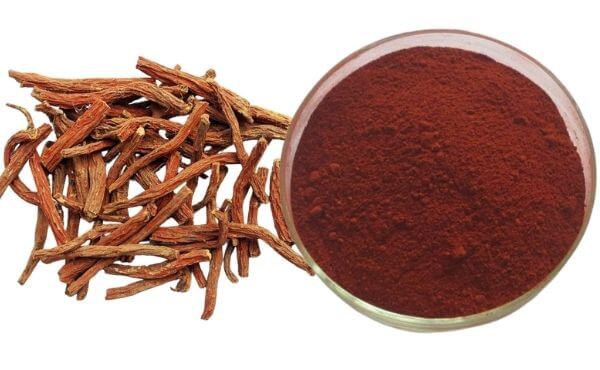
Walk through any traditional Chinese medicine market, and you'll find bins of dried, twisted roots, their rusty-red bark whispering of ancient pharmacopeias. This is Salvia miltiorrhiza, or Danshen, a botanical staple. Within that unassuming root lies a molecule that has sparked a distinct and modern demand: Tanshinone IIA. The journey from harvested root to purified chemical is a fascinating glimpse into a very specific niche of China's wholesale botanical industry.
China's position as the primary global source for Tanshinone IIA isn't an accident. It's the convergence of historical cultivation, concentrated raw material access, and industrialized extraction. Salvia miltiorthiza is deeply embedded in Chinese agricultural and medical tradition, with dedicated growing regions and generations of farming know-how. This creates a raw material base that is both vast and geographically focused. For wholesale suppliers, proximity to these agricultural sources is the first critical link in the chain. The majority of suppliers operate within this ecosystem, often in provinces like Shandong, Shaanxi, and Sichuan, where Danshen cultivation is prevalent.
The process itself separates commodity herb sellers from specialized chemical suppliers. While powdered Danshen root is widely available, Tanshinone IIA requires a more refined operation. Suppliers in this space are typically equipped with industrial-scale extraction and purification facilities. The common method involves using solvents like ethanol or acetone in large extraction vessels, followed by a series of chromatographic separations to isolate the specific tanshinones. The technological threshold here is significant. A reputable supplier isn't just selling a plant; they are providing a characterized chemical compound, which necessitates HPLC for verification and quality control protocols to guarantee a standardized percentage of Tanshinone IIA, often 98% or higher for the pure powder.
This leads to the critical aspect of specification. The wholesale market for Tanshinone IIA is not monolithic. Buyers—ranging from pharmaceutical researchers and nutraceutical formulators to cosmetic labs—have divergent needs. Consequently, suppliers typically offer a tiered product line. This includes crude Tanshinone extracts (with a lower, variable percentage of IIA), standardized extracts (where the IIA content is set at a specific point, like 10% or 50%), and finally, high-purity Tanshinone IIA (98%+). The pricing and minimum order quantities (MOQs) escalate accordingly. A buyer seeking kilos of a 10% extract for a supplement blend is engaging with a different segment of the market than a lab procuring 100 grams of 98% purity for clinical studies.
Navigating this supplier landscape requires a focus on verification over assertion. The field is mixed, with established manufacturers operating alongside trading companies. Key differentiators are transparency and proof. Inquiries should move past price and quickly into documentation: consistent Certificates of Analysis (CoAs) from batch to batch, third-party assay verification, and clear information about extraction methods. For international buyers, a supplier’s experience with export compliance—navigating regulations, providing necessary paperwork for customs, and understanding CITES (Convention on International Trade in Endangered Species) considerations if applicable—is as important as the product itself.
The demand driving this supply is multifaceted and global. In research, Tanshinone IIA is studied for its potential cardiovascular and anti-inflammatory properties. The nutraceutical industry incorporates it into heart-health and antioxidant formulations, while the cosmetic sector explores its use in topical preparations for its purported anti-inflammatory effects. This diverse application base means a Chinese wholesale supplier may be shipping to a university in Germany, a supplement brand in the United States, and a cosmetic lab in South Korea, all from the same production line.
Ultimately, the story of China's Tanshinone IIA wholesale market is one of layered transformation—not in a hyperbolic sense, but in a literal, physical one. It is the process of turning a cultivated root into a consistent, powdered compound that meets the precise requirements of modern science and commerce. It operates at the intersection of traditional herb farming and advanced chemical isolation, serving a discreet but steady global demand. For those in the market, success lies in understanding these layers—the agricultural origin, the industrial process, the graded specifications, and the rigorous proof of quality that separates a true supplier from a simple vendor. It’s a specialized trade, built on a foundation of old roots and new technologies.