

MedTech Lighting Solutions for EMS Students in Clinical Settings
EMS students entering training often ask 'what do i need for emt school', especially when preparing for overnight clinicals where poor visibility can turn routine assessments into frustrating challenges and compromise both learning and patient care.
The tactical flashlight and aluminum penlight address these exact needs with purpose-built designs tailored for emergency medical training. Both products combine thoughtful features and practical performance that students rely on throughout clinical rotations and field experiences.
Night shifts and overnight clinicals quickly reveal the limitations of improvised solutions like phone lights or generic flashlights. Dedicated gear that offers adjustable beams, medical markings, and dependable construction makes a measurable difference in confidence and efficiency.
Why Every EMS Student Needs Reliable Lighting Gear
EMS training often involves overnight clinicals, ambulance rides, and low-light scenarios where visibility directly impacts patient assessment and safety.
Without dependable lighting tools, students struggle to navigate dark environments or perform accurate neurological checks. These tools address common frustrations such as inadequate phone flashlights or borrowed equipment that fails at critical moments.
A dedicated tactical flashlight handles broad-area visibility while a focused penlight supports close-up examinations, creating a complete lighting solution tailored to EMS demands. Mastering proper lighting early in training prepares students for real-world fieldwork where every second counts.
How MedTechKits Supports EMS Training
Emergency medical training requires tools that are simple and built with the realities of field work in mind. For many students assembling their first medkit, finding equipment that balances reliability with affordability becomes an important step in preparing for clinical shifts and emergency scenarios.
MedTechKits focuses on supporting this stage of the journey by providing practical tools designed specifically for EMS students and early career responders.
Rather than overwhelming new learners with complicated gear, the goal is to offer straightforward equipment that performs consistently during training and real patient care.
Lighting Performance of the MedTech Tactical Flashlight
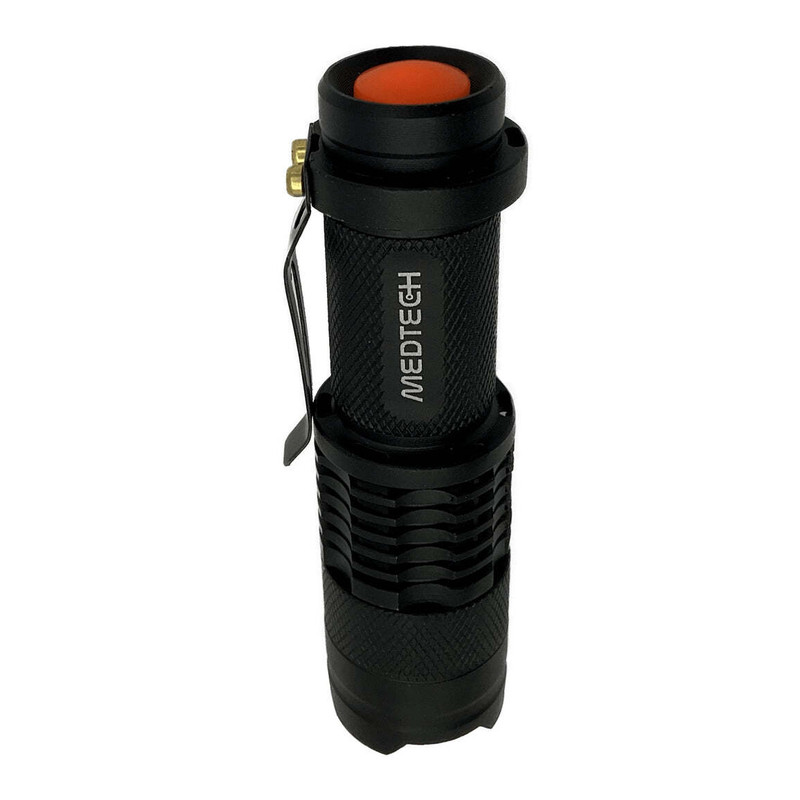
The tactical flashlights available through MedTechKits feature a compact, durable construction that withstands the rigors of EMS use, including water-resistant properties for rainy conditions.
The sturdy build of the flashlight includes an easy-grip surface that remains secure even in wet weather, making it practical for extended shifts. The 350-lumen output delivers exceptional brightness that outperforms many basic options, providing clear visibility in dark clinical settings.
Reviewers consistently describe the light as super bright and reliable for demanding environments like firefighting or ambulance work. The solid feel and thoughtful engineering ensure it holds up during frequent handling without adding unnecessary bulk.
Zoom Beam and the 3 Modes in Action
The telescoping zoom head allows seamless switching between a wide flood beam for lighting entire scenes and a narrow spotlight for precise targeting.
Three distinct modes offer adaptability across various situations. High beam provides maximum output. Low beam helps conserve battery power. Strobe supports signaling when needed.
In practice, the zoom feature proves invaluable when transitioning from broad overviews to detailed inspections without changing tools. The mode selection provides flexibility that supports both routine checks and urgent responses.
Battery Life, Clip and Real-World EMS Use
Powered by a single included AA battery, the flashlight maintains consistent performance throughout long clinical shifts with straightforward power management. The robust clip securely attaches to pockets or radio straps, enabling hands-free operation that keeps gear accessible at all times.
EMS professionals note the clip's reliability on radio straps during active duties, preventing loss while allowing instant access. The design supports prolonged use without frequent interruptions, aligning perfectly with the unpredictable nature of emergency response.
Build and Design of the MedTech Aluminum Penlight
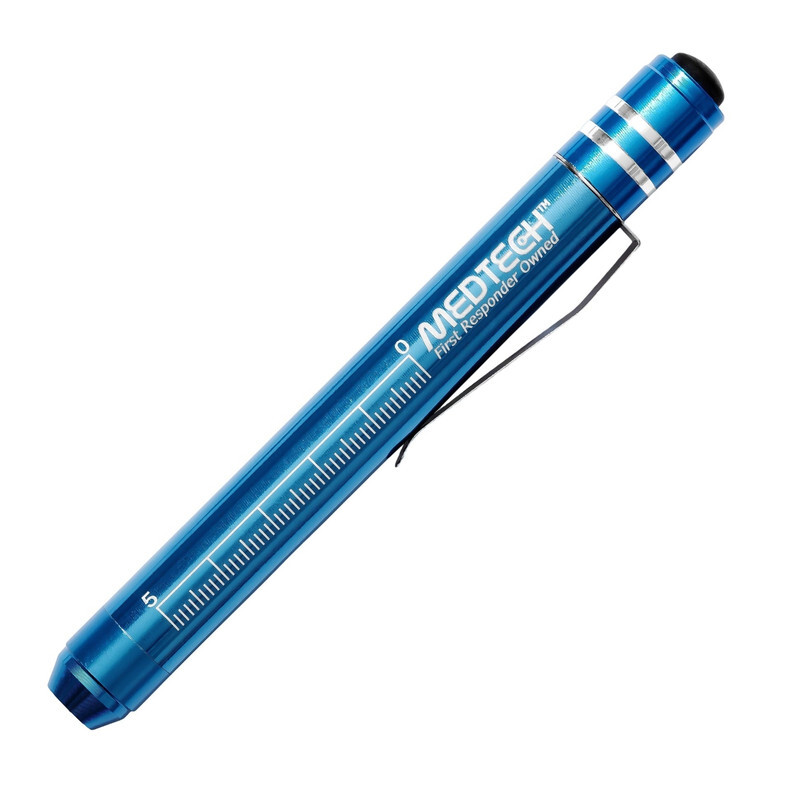
Crafted from aluminum with an IP67 rating, this pen light medical tool from MedTechKits resists dust completely and withstands submersion up to one meter, ensuring functionality in challenging conditions.
The heavy-duty casing provides a solid, professional feel that conveys quality during patient interactions. Laser-engraved markings enhance its utility without compromising the sleek, compact profile.
The waterproof design offers peace of mind for EMS work in variable weather or accidental exposure. Its robust construction supports daily carry without fear of damage from drops or moisture.
Pupil Gauge and Ruler: Why They Matter
The integrated pupil gauge allows quick, accurate measurement of pupil size and reactivity, critical for assessing neurological status and detecting abnormalities. A 5 cm ruler provides immediate reference for wound sizing or other measurements during examinations.
In EMS training, such tools help students practice thorough evaluations that inform treatment decisions. The markings promote confidence in documenting findings accurately during clinical rotations.
Pocket Performance & Battery Life
The slim design slips easily into shirt pockets, pencil holders, or medical bags, maintaining accessibility without bulk. Two included AAA batteries deliver reliable power for extended use in daily assessments.
The focused white LED provides clear visibility tailored to close-range tasks like pupil checks. Users praise the penlight's comfortable fit and consistent operation throughout shifts. Its lightweight yet substantial build ensures it remains unnoticed until needed.
Head-to-Head Comparison of Both Lights
The tactical flashlight excels in broad visibility and versatility with its 350-lumen output, zoom capability, and multiple modes suited to scene management.
In contrast, the penlight prioritizes precision with its focused LED, pupil gauge, and ruler designed for detailed neurological checks. While the flashlight offers hands-free clipping for dynamic use, the penlight emphasizes pocket-friendly compactness and superior waterproofing.
Both emt tools complement each other by covering different aspects of EMS lighting needs without overlap. The tactical model handles wide-area demands, whereas the penlight supports intimate assessments.
Final Verdict: Should You Buy Both?
Acquiring both the tactical flashlight and aluminum penlight creates a comprehensive lighting solution that enhances every phase of EMS work. The duo eliminates the limitations of relying on a single tool, providing adaptability from scene lighting to precise diagnostics.
The synergy between broad coverage and focused examination capabilities proves invaluable for comprehensive patient care. This combination stands out as a smart, purpose-built approach for aspiring EMS professionals. Ultimately, owning both equips trainees with the reliability needed to excel in demanding environments.
Frequently Asked Questions
2. How does the zoom feature on the tactical flashlight help during ambulance shifts or clinicals?
The telescoping zoom lets you instantly switch from a wide flood beam to light up an entire patient compartment or scene to a narrow spotlight for pinpointing small details like IV sites or equipment labels.
3. Is the aluminum penlight bright enough for checking pupils in very bright ambient light?
The white LED provides sufficient focused intensity for standard pupil assessments, even in challenging conditions, as long as you minimize surrounding light interference by cupping your hand or shading the eye.
5. Does the IP67 rating on the penlight mean it can survive being dropped or cleaned with disinfectants?
The full dust-proof and submersible rating protects against accidental exposure to fluids or splashes common in EMS environments. You can wipe it down with standard medical disinfectants without damage to the aluminum body or markings.
7. Are the pupil gauge and ruler on the penlight accurate enough for charting findings to preceptors?
The laser-engraved markings provide reliable reference points for quick pupil size estimation and basic wound or laceration measurements up to 5 cm. They support consistent documentation during training and align well with standard EMS neurological and trauma assessment protocols.
Practical Guides and Tools for EMS Training
1. The Role of Prestige and Dual Head Stethoscopes in EMS Practice
2. Optimizing Rapid Patient Exposure with MedTech Trauma Shears
