


A Manifesto for the Modern Worker
We spend roughly 80,000 hours of our lives at work. That's a staggering number—a full decade of waking hours, spent leaning over keyboards, staring at screens, and slowly forgetting that we have bodies at all. Most of those hours happen in a chair. And somewhere along the way, we stopped questioning why.
The story of the standing desk is not a story of innovation. It's a story of rediscovery. We didn't invent the idea of standing to work; we merely forgot it. Before the industrial revolution, most work happened upright. Craftsmen stood at benches. Clerks stood at podiums. Even in early offices, standing was the default. Then came the typewriter, the computer, and the relentless march of ergonomic advice that told us sitting was "correct."
It wasn't.
Today, we know better. We know that the human body was designed for motion, not stillness. We know that sitting for hours at a time is a risk factor for everything from back pain to metabolic disease. And we know that the simplest solution is often the best one: just stand up. That's the promise of the sit to stand desk. Not a cure-all, not a revolution, but a tool—a quiet, unassuming tool that gives you permission to move.
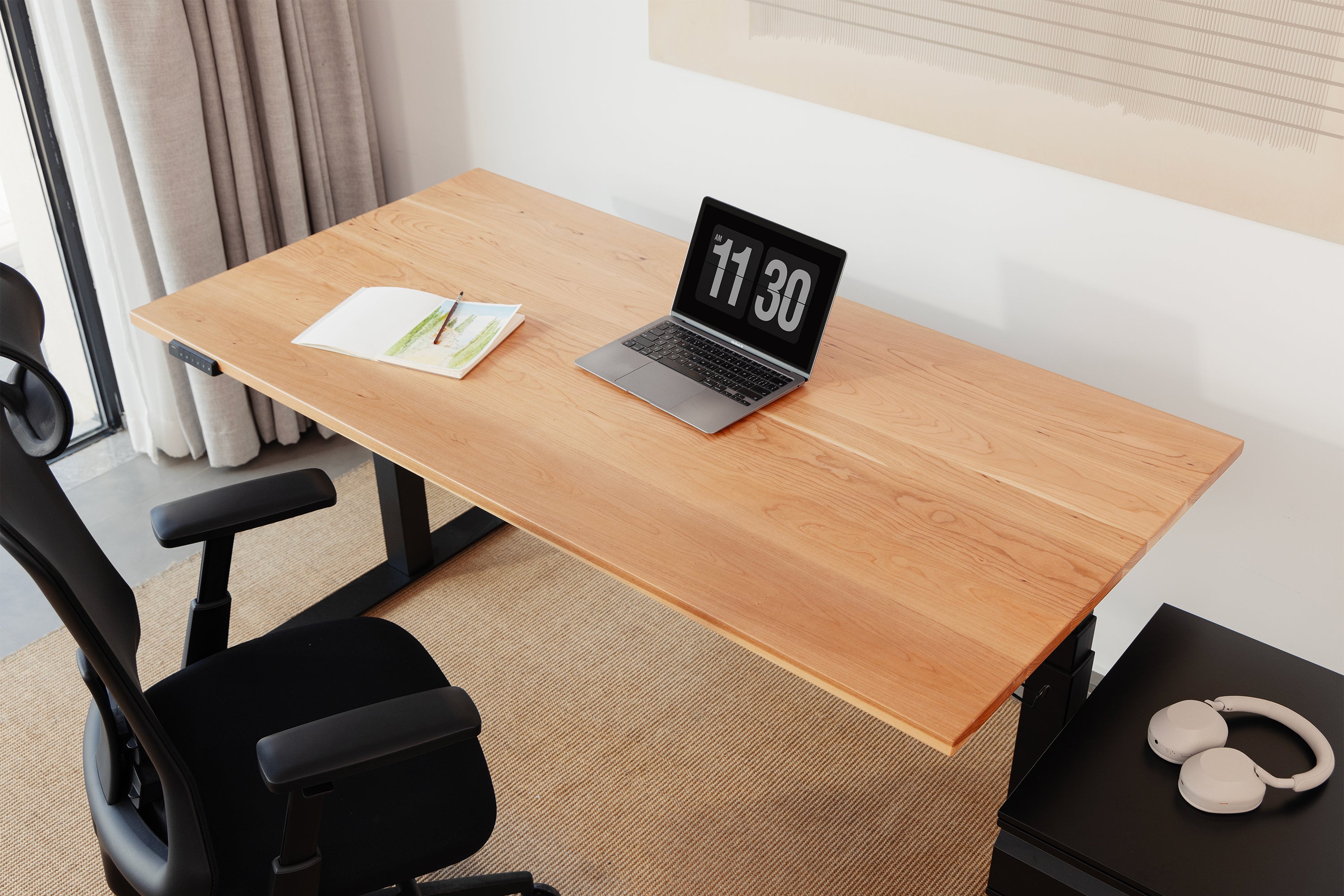
The sit to stand desk is not complicated. It doesn't require a manual, a subscription, or a fitness tracker. It asks nothing of you except a willingness to listen to your own body. When you feel stiff, you stand. When you feel tired, you sit. The rhythm emerges naturally. Over time, the small act of transitioning between postures accumulates into something meaningful: less pain, more energy, a sense of vitality that lasts through the afternoon. The sit to stand desk is not about choosing one position over the other. It's about refusing to stay in any position for too long.
One brand has come to embody this philosophy with remarkable clarity. The vernal standing desk doesn't make grand promises or flashy claims. It simply arrives, well-built, thoughtfully designed, and ready to work. Users often describe it with the same words: stable, quiet, reliable. There is no attempt to gamify your posture or guilt-trip you into standing more. The vernal standing desk trusts you to know what your body needs. It is the kind of desk that disappears into the background of your workday, not because it's unremarkable, but because it works so seamlessly that you stop noticing it entirely.
What makes the vernal standing desk particularly compelling is its refusal to cut corners. The frame is solid steel. The motor operates with a smooth, consistent motion that feels almost hydraulic. The height range accommodates both the very tall and the very short. The controls are intuitive, with memory presets that allow multiple users to save their preferred heights. These are not revolutionary features, but they are executed with a level of care that sets the vernal standing desk apart from cheaper alternatives. It is the kind of desk that earns loyalty through quiet competence.
For those who need a little more power, the electric adjustable standing desk takes the concept a step further. With a gentle touch of a button, the desk rises or descends, responding to your whim without complaint. This is not just convenience; it's encouragement. The easier it is to change posture, the more often you'll do it. And the more often you do it, the better you'll feel. The electric adjustable standing desk removes every excuse, making the healthy choice the obvious choice.
Space is a luxury many of us don't have. We work in corners, in closets, in slivers of rooms that were never designed for desks. The corner standing desk turns that limitation into a strength. By embracing the geometry of a room, it creates an L-shaped surface that offers room to spread out without taking over the entire room. One wing for the main work, another for projects, reference materials, or a second monitor. The corner standing desk proves that small spaces can still support big ambitions.
Leaders have a particular challenge. They need presence, authority, and the energy to sustain both. The standing executive desk understands this. It is crafted from premium materials—rich wood finishes, polished metal, thoughtful details that project success. But its true intelligence lies beneath the surface: a discreet electric lift mechanism that allows the leader to rise without interrupting a meeting or a strategic discussion. The standing executive desk is not just a piece of furniture; it's a statement. It says, "I take my work seriously, and I take my body seriously too."
For those who find the industrial aesthetic of many standing desks too cold, the solid wood standing desk offers a different kind of appeal. Each piece is unique, carrying its own history in the grain, the knots, the subtle variations of color. It feels alive under your hands, grounding you in a way that synthetic materials cannot replicate. But beauty is not its only strength. The weight of the wood provides exceptional stability, reducing vibration and creating a calm, steady work surface. When paired with electric height adjustment, the solid wood standing desk becomes a bridge between the timeless and the modern.
Of course, no product is perfect, and this is where vernal desk reviews become invaluable. Reading through vernal desk reviews provides a window into the real-world experience of owning the desk. The feedback is refreshingly honest. Users praise the stability at standing height, the ease of assembly, and the responsive customer service. Some note minor quibbles—the control panel could be more intuitive, the cable management tray could be deeper—but the overwhelming sentiment is one of satisfaction. The vernal desk reviews consistently highlight the desk's value proposition: a high-quality, reliable standing desk at a price that doesn't require a second mortgage. It's the kind of product that earns loyalty not through marketing, but through simply doing what it promises.
Why does this matter? Because work is not something we do to our bodies; it is something we do with our bodies. The sit to stand desk is a reminder that we are not just brains in jars, processing information through a screen. We are physical beings, and our physical state affects every decision we make, every idea we have, every interaction we share.
When you stand, your blood flows more freely. Oxygen reaches your brain more efficiently. Your heart works a little harder, your muscles engage, your spine straightens. These are not abstract benefits; they are real, measurable improvements to your cognitive function. The sit to stand desk is not a luxury; it's a tool for clearer thinking.
Perhaps that's the most compelling argument for making the switch. The sit to stand desk is not just about comfort; it's about effectiveness. When your body feels better, your mind works better. And when your mind works better, so does everything else.
The revolution is not loud. It doesn't demand protests or petitions. It happens every time someone presses a button and rises from their chair. It happens every time a body shifts from stillness to motion. It happens in the quiet, consistent choice to move. That is the real power of the standing desk.
