

Ophthalmology Surgical Instruments: Precision Tools for Clearer Outcomes
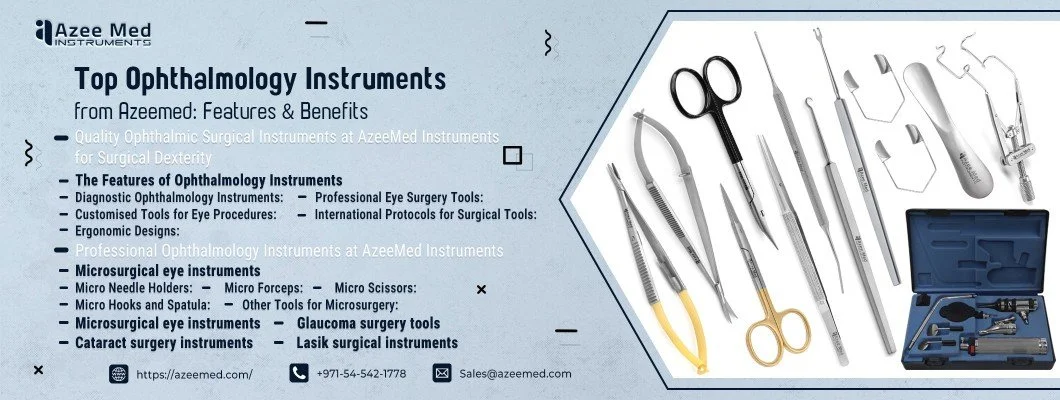
When you're working on a structure that measures less than an inch across, every fraction of a millimeter counts! High-quality ophthalmology surgical instruments give surgeons the steady control and fine precision that delicate eye procedures demand. The key ophthalmology surgical instruments types, where they're used, what quality looks like, and how to keep them in excellent condition.
Why Precision Matters in Eye Surgery
The eye leaves almost no room for error. Corneal incisions, capsule openings, and retinal maneuvers often happen under a microscope, where even a tiny tremor can feel huge. Well-crafted ophthalmology surgical instruments turn small hand movements into exact, predictable actions. Fine tips, smooth closing action, and light weight help surgeons work confidently while protecting fragile tissue.
Essential Instruments in the Ophthalmic Kit
Most ophthalmic trays share a reliable core set. Lid speculums hold the eyelids open and keep the field clear. Microsurgical forceps, such as Colibri and McPherson styles, grasp delicate tissue and sutures with ease. Vannas and Westcott scissors make tiny, clean cuts, while Castroviejo needle holders and calipers support accurate suturing and measuring. Cataract surgeons also rely on Sinskey hooks, phaco choppers, and capsulorhexis forceps. Together, these ophthalmology surgical instruments cover a wide range of anterior and posterior segment work.
Matching Tools to Each Procedure
Choosing the right instrument starts with the case in front of you. Cataract surgery calls for choppers and hooks that move nuclear fragments smoothly. Corneal transplants need sharp trephines and fine-toothed forceps, and oculoplastic procedures use slightly sturdier tools for eyelid and orbital tissue. Glaucoma and retina surgeries each bring their own specialized designs. When you match ophthalmology surgical instruments to the procedure, you reduce tissue trauma and support faster visual recovery.
What Quality Looks Like
Here's a helpful tip: test the feel of an instrument before you rely on it! Premium ophthalmology surgical instruments are made from surgical-grade stainless steel or lightweight titanium, with precisely aligned tips and a smooth, glare-reducing finish. They should feel balanced, close evenly, and spring back consistently. Poorly made tools may misalign, dull quickly, or catch tissue, which can affect both safety and results.
Why Choose AzeeMed
AzeeMed focuses on making surgical instruments of the highest quality for the medical community around the globe. With over two decades of experience, we offer an array of instruments for plastic, dental, ophthalmic, neuro and spine, and orthopedic surgeries. Our shepherd hook explorer are crafted with the precision, durability, and comfortable handling that eye surgeons count on case after case.
Conclusion
Clear vision starts with confident surgery, and the right tools make every step smoother. When you choose well-designed instruments, insist on quality, and follow a steady care routine, you set the stage for consistent outcomes your patients will notice. Explore AzeeMed's collection today and discover the ophthalmology surgical instruments your team can trust!
